
CellSight AI Platform

The technology behind a connected image-analysis workflow.

Explore the architecture connecting microscopic image workflows, batch analytics, evidence retrieval and AI-assisted product knowledge.

Demo
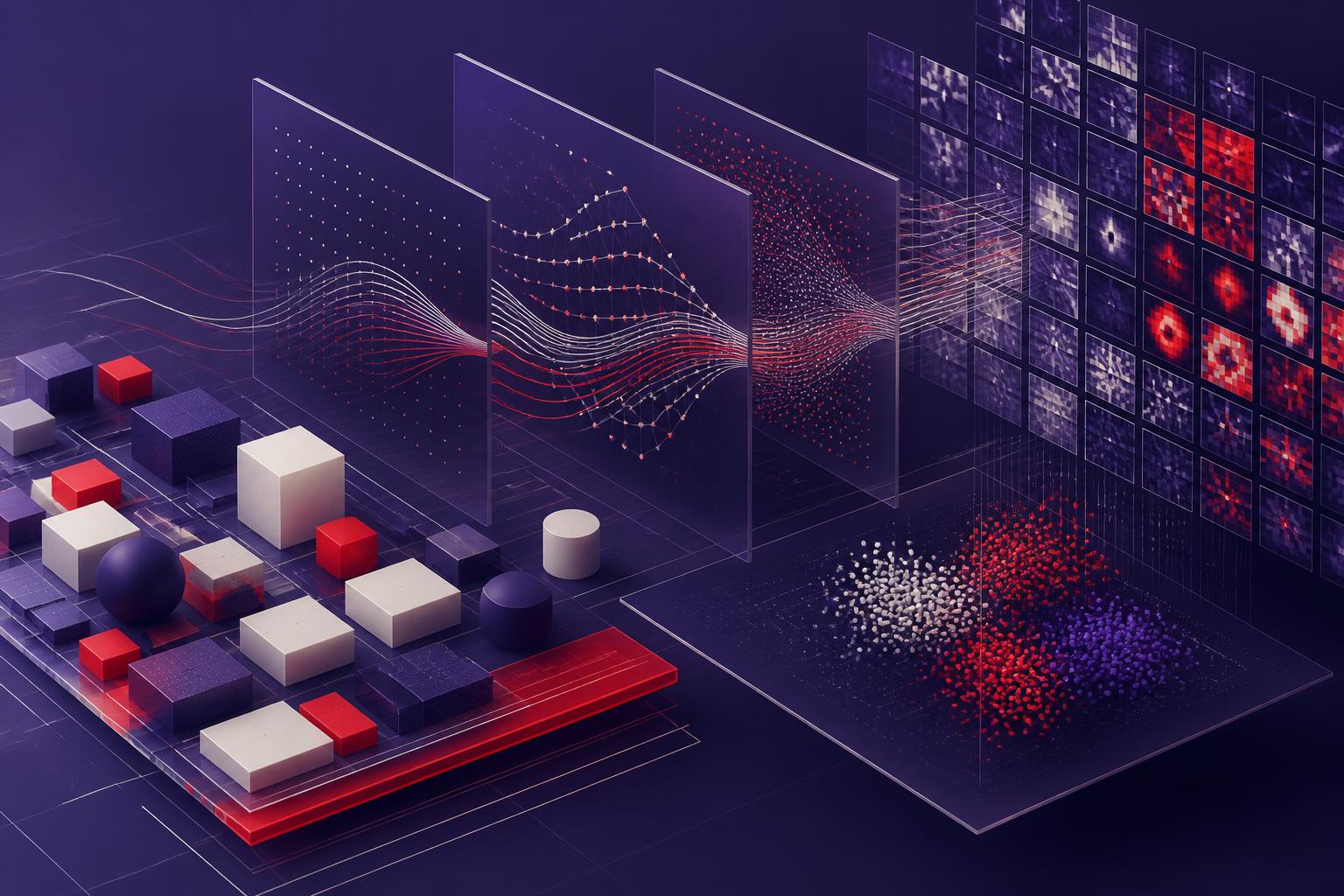
Abstract layered render of geometric foundation blocks, curve planes and feature-map grids in violet, red and off-white.
Abstract illustration of the CellSight platform architecture.

Platform architecture

A browser-based application layer, a typed service interface and modular AI services that can be developed independently.

  • Browser application for image, batch, evidence and assistant workflows
  • Typed service interface between the interface and platform services
  • Modular services so image, analytics and AI work can progress separately
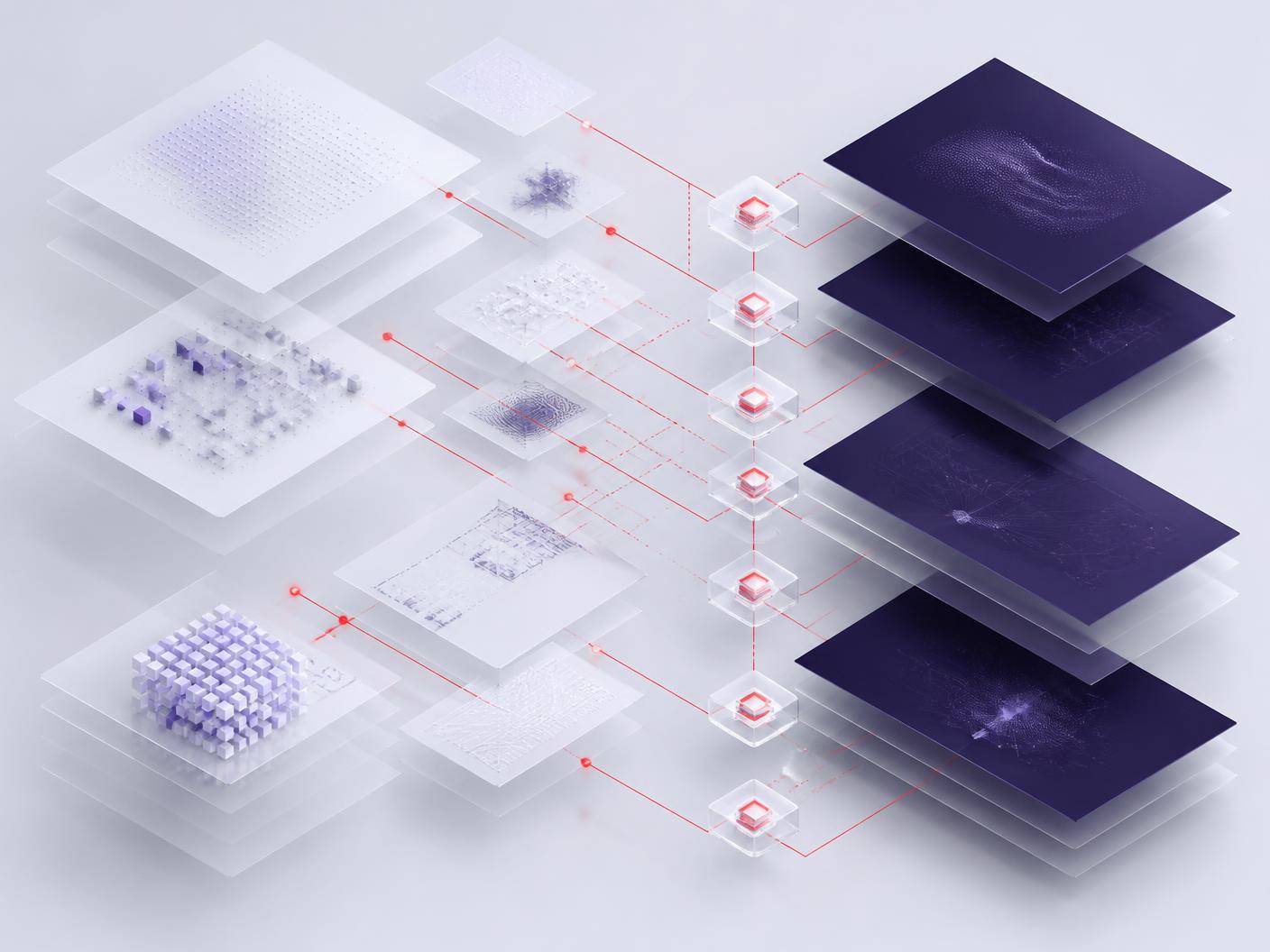
Image intake and technical checks

Images enter through a single intake path that records file metadata, validates supported formats and attaches a trace identifier.

  • Supported-format and file-size validation in the browser
  • File metadata, dimensions and timestamp captured at intake
  • Trace identifier attached to every image interaction

Batch analytics

Structured records are imported, validated against a schema and summarised entirely from the loaded data.

  • CSV and JSON import with schema validation
  • Totals, status distribution and failure reasons derived from loaded records
  • Filtering, sorting and export back to CSV or JSON

Evidence Hub and retrieval

Approved product and technical sources are stored as structured records that can be searched and cited.

  • Source title, type, review date and citation identifier on every record
  • Search and source-type filtering across the record set
  • Stable record links usable as citation targets

AI Assistant and source citations

The assistant is designed around retrieval over approved sources, so every answer can be traced to the records behind it.

  • Question interface with suggested entry points
  • Answers presented with the citations that support them
  • An explicit response when the approved sources do not cover a question

Traceability and versioning

Interactions carry identifiers and timestamps so work can be reconstructed and reviewed later.

  • Trace identifier and timestamp on image and batch interactions
  • Versioned evidence records with review dates
  • Exports that carry their source record identifiers

Technology Roadmap

Next Development Priorities

Research directions being prepared for the platform. These are development priorities, not delivered capabilities.

Abstract layered render of translucent document planes, dataset tiles and version nodes connected by fine red trace lines.
Abstract illustration of layered research and evaluation work.
  1. 1

    Subject-disjoint evaluation

    Evaluate on splits that prevent subject leakage between training and test data.

  2. 2

    Probability calibration

    Study whether model output can be made interpretable as a calibrated probability.

  3. 3

    Selective prediction and abstention

    Investigate when a model should decline to produce an output.

  4. 4

    Input-quality and out-of-distribution research

    Detect fields that fall outside the modelled input distribution.

  5. 5

    EfficientNet benchmarking

    Benchmark a convolutional baseline against the platform reference workflow.

  6. 6

    DinoBloom research

    Assess whether domain feature representations suit blood-cell image tasks.

  7. 7

    Explainability experiments

    Explore region attribution as a review aid, with a written interpretation boundary.